"Golden Splendor: Life Aesthetics and Cultivation from the Mawangdui Han Tombs" Digital Project of the National Treasure Art Exhibition

"Golden Splendor: Life Aesthetics and Cultivation from the Mawangdui Han Tombs" Digital Project of the National Treasure Art Exhibition
Project Description:

Two fully immersive CAVE light-and-shadow spaces
A feast of Han-dynasty life aesthetics, reimagined through digital creativity

On July 3, 2026, the National Treasure Art Exhibition "The House of Golden Splendor — The Aesthetics of Life and Cultivation in the Mawangdui Han Tombs" officially opened at the China Art Museum (Shanghai Art Museum). The exhibition is organized under the guidance of the Publicity Department of the Shanghai Municipal Committee of the CPC, the Shanghai Municipal Administration of Culture and Tourism (Shanghai Municipal Administration of Cultural Heritage), the Department of Culture and Tourism of Hunan Province, the Shanghai Office of the Hunan Provincial People's Government, and the Hunan Provincial Administration of Cultural Heritage. It is hosted by the Shanghai Art Museum, the Hunan Museum, and Tourism Times.

This exhibition features 195 sets (totaling 472 individual pieces) of carefully selected artifacts, including 31 sets of top-tier national treasures (Grade-One cultural relics). It marks the largest and highest-grade exhibition outside Hunan Province in the over-50-year history of archaeological research on the Mawangdui Han Tombs.

Through visual and contemporary approaches, the exhibition transforms "archaeological evidence" into an "aesthetic site," artistically reinterpreting the cultural narrative of the Mawangdui Han Tombs with modern visual language. It shifts the audience's experience from merely "viewing history" to "immersively experiencing culture."

ALIGHT (Guangyu Laite) serves as the core digital content partner for this exhibition, deeply involved in the digital creative planning and immersive content production. Drawing on the team's extensive hands-on experience in the field of digital art, they have employed cutting-edge technologies such as generative AI, 3D reconstruction, and XR immersive interaction to create two immersive digital spaces — "A Day in the House of Golden Splendor" (Qianjin Yiri) and "Eternal Flowing Clouds" (Yunqi Buxi) — delivering to audiences a grand feast of Han-dynasty life aesthetics reimagined through digital creativity.
Scholarship as Foundation
Reimagining the Visual Universe of Han-Dynasty Cosmology

All digital creative work is grounded in rigorous archaeological research and cultural tracing. In the early stages of creation, the ALIGHT team conducted in-depth studies of the Mawangdui artifacts themselves and systematically surveyed the cultural framework of the Han dynasty, establishing a disciplined logical structure for their creative approach.

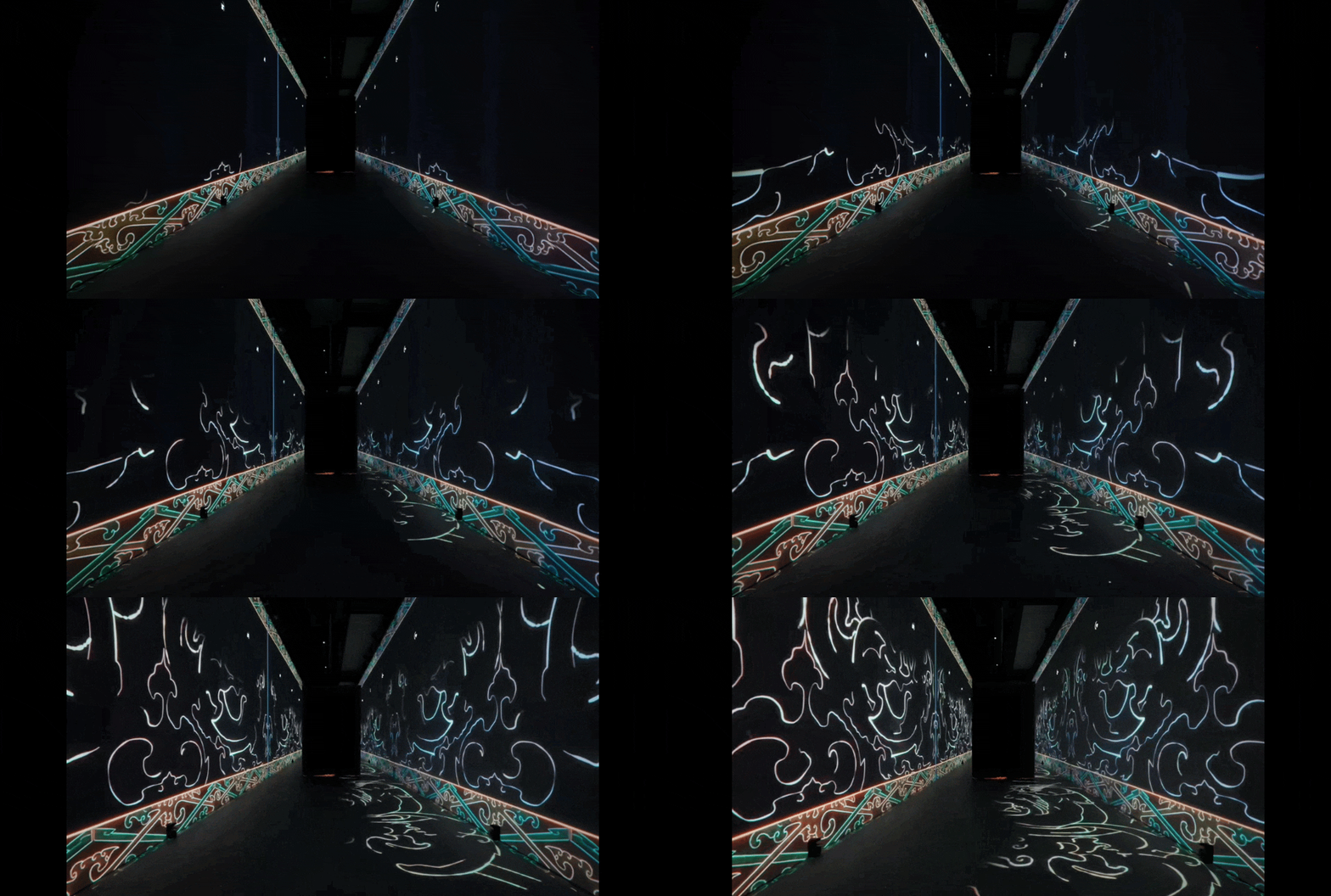
Based on this comprehensive and meticulously researched foundation, the team developed the introductory hall exhibition space — "Eternal Flowing Clouds" (Yunqi Buxi). Centered on the cloud-scroll motif from the four-layered nested coffins of Mawangdui Han Tomb No. 1 — a national treasure — the space employs digital light-and-shadow technology to transform the abstract cosmological views and life-and-death philosophy of the Han dynasty into a mystically transcendent immersive journey.

In addition, the team integrated celestial imagery from the silk manuscript "Miscellaneous Astronomical and Meteorological Divinations" into the light-and-shadow narrative. The moment visitors step into the hall, they are fully immersed in the Han-dynasty philosophical contemplation of the cycle of life, the transition between life and death, and the eternity of heaven and earth.

Technology Empowers Aesthetic Narrative
Recreating Lady Xinzhui's "Twelve Shichen" (A Day in Her Time)

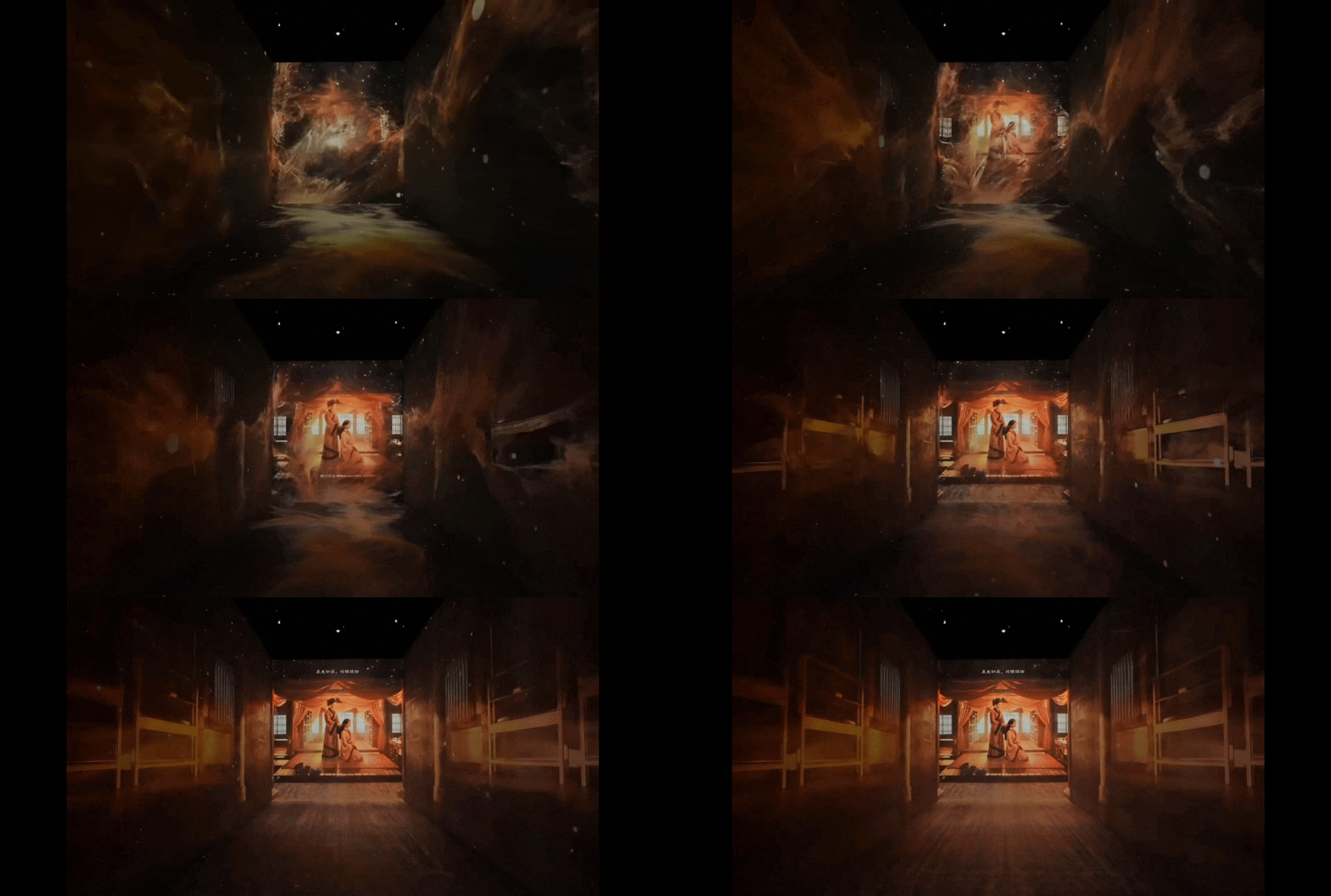
ALIGHT consistently adheres to the creative philosophy of letting technology serve cultural storytelling, delivering a comprehensive and renewed interpretation of Han-dynasty motifs, artifact forms, and life philosophy. The team employed cutting-edge technologies such as 3D modeling, particle effects, and point-cloud rendering to construct a fully enveloping immersive space, culminating in the centerpiece of this exhibition — the "A Day in the House of Golden Splendor" (Qianjin Yiri) immersive digital performance space.

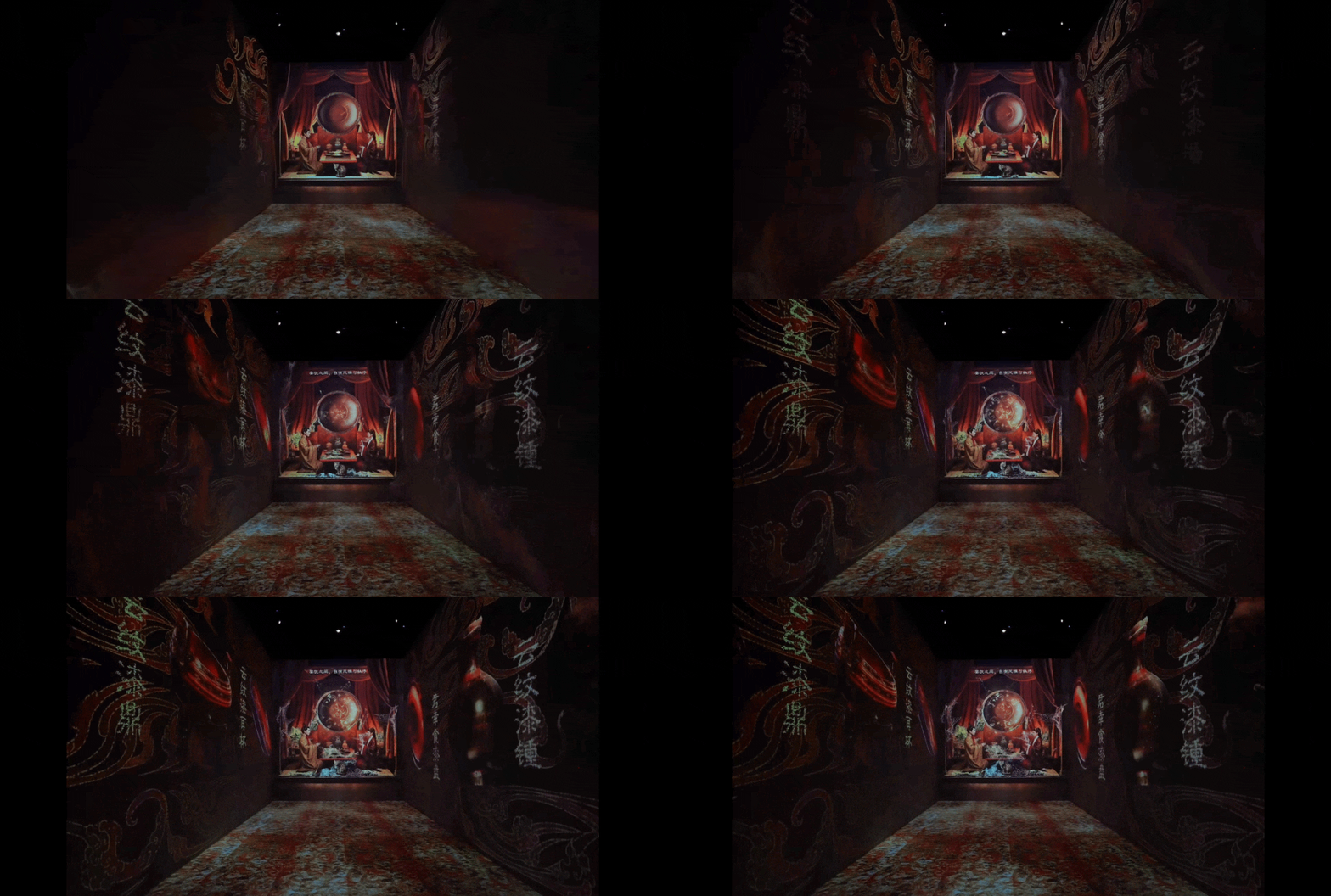
"A Day in the House of Golden Splendor" follows the daily rhythm of Lady Xinzhui's life, structured around three narrative chapters: "Morning Adornment in the Golden House," "Daytime Banquet at the Marquis of Dai's Mansion," and "The Dream of Eternal Life." Spanning four dimensions — materiality, daily life, aesthetics, and spirituality — the experience weaves together national treasures such as the T-shaped silk painting from Mawangdui Han Tomb No. 1 (one of the first artifacts prohibited from being exhibited abroad) and the lacquer food tray with a civet-cat motif inscribed with the words "Jun Xing Shi" (May You Enjoy Your Meal), integrating them into a complete narrative thread that endows the scattered unearthed artifacts with cohesive storytelling and vivid vitality.

In a five-minute immersive journey, the audience witnesses the rich and elegant life of the Marquis of Dai's household unfold — from morning grooming to festive banquets, from precious artifacts to spiritual pursuits. Through the interplay of light and shadow, visitors not only gain a vivid and authentic glimpse into the daily life of Western Han aristocracy but also come to appreciate their profound contemplations on the value of life, spiritual fulfillment, and eternal existence.

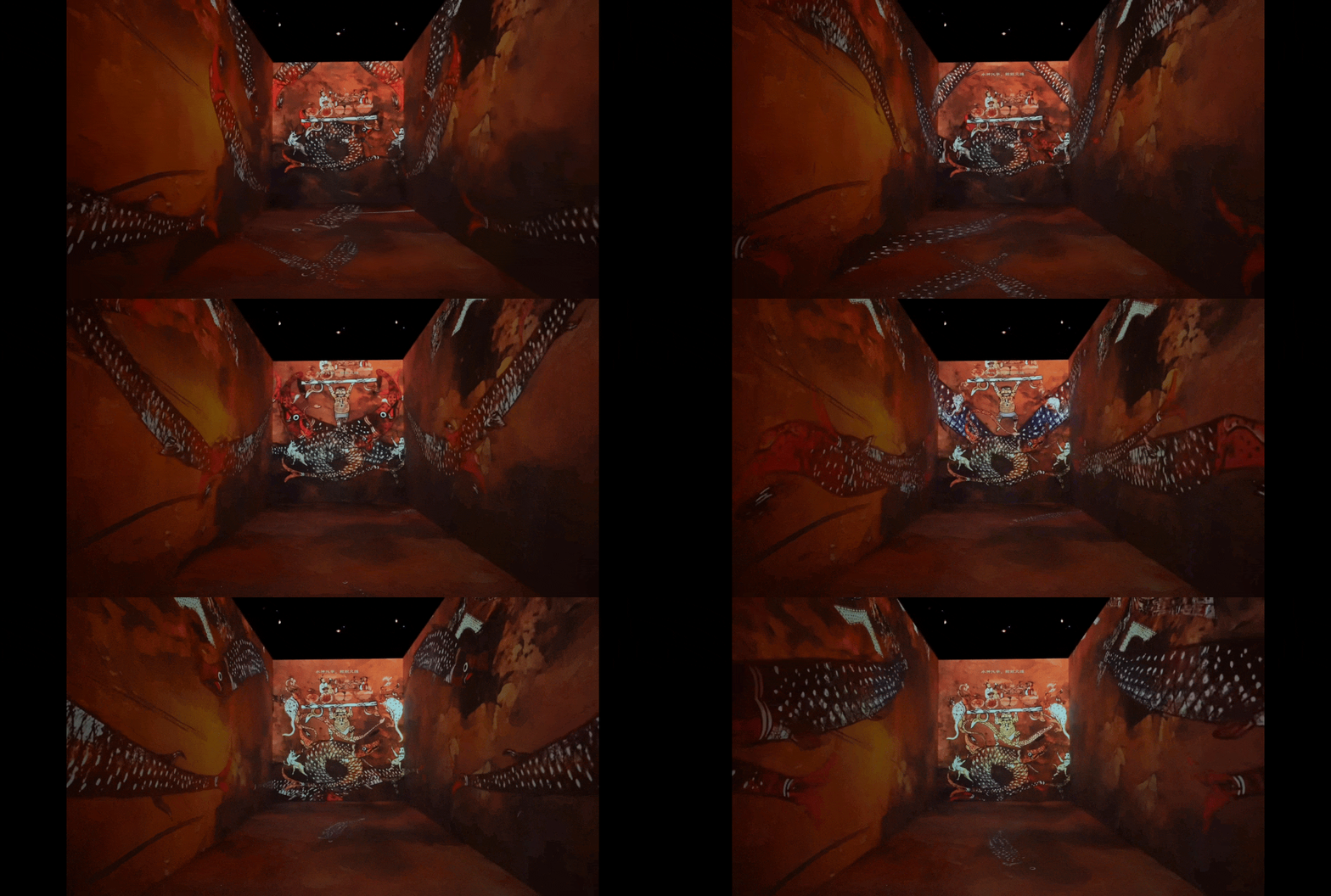
In the core chapter "The Dream of Eternal Life," the team has digitally reconstructed and dynamically animated the three-tiered cosmos — "Underworld — Earthly Realm — Celestial Realm" — as depicted in the supreme national treasure: the T-shaped silk painting from Mawangdui Han Tomb No. 1. The audience's vision follows the ascending mythical creatures in the painting — whales and giant fish, dragons, immortal cranes, and divine leopards — rising ever upward, journeying with Lady Xinzhui's soul through layer upon layer of heavenly gates until they reach the celestial realm.

In this visual narrative, death is no longer the end of life, but a transcendent journey toward immortality. At this moment, what the audience beholds is no longer merely excavated artifacts, but the most vivid and direct expression of the Han-dynasty philosophy of "Treating death as one would treat life" (事死如事生) — the belief that the afterlife mirrors the earthly existence.

When Thousand-Year-Old Aesthetics Meets Digital Rebirth
Translating the Cultural Lineage Through Digital Means, Bridging Ancient and Modern Aesthetics

As a leading enterprise in China's digital technology and creative industry, ALIGHT (Guangyu Laite) is committed to the mission of "empowering cultural heritage with technology." Through a full-industry-chain ecosystem — spanning creative planning, technology R&D, content production, space construction, and in-depth operation — ALIGHT revitalizes traditional culture that embodies the wisdom of the Chinese nation in the digital age. By translating ancient civilizations into contemporary contexts, the company dissolves the temporal and spatial gap between the public and China's ancient heritage.

For most people, the Han dynasty — over 2,100 years ago — is but a remote temporal marker, not a tangible, emotionally resonant historical reality. The two fully immersive CAVE light-and-shadow spaces — "A Day in the House of Golden Splendor" and "Eternal Flowing Clouds" — created by ALIGHT for the National Treasure Art Exhibition "The House of Golden Splendor — The Aesthetics of Life and Cultivation in the Mawangdui Han Tombs" serve as a vital bridge between historical artifacts and contemporary aesthetics. What they connect is not merely the relics inside the display cases and the visitors outside them, but the distant past and the living present — weaving together the wisdom of ancient life and the spiritual world of today's people.

As Lady Xinzhui awakens in the morning light, gazes into her mirror to dress, raises her cup in festive toast, and finally ascends to heaven on the silk painting, this thousand-year-spanning connection becomes tangibly palpable. What the audience sees in her is not a distant historical figure, but an ordinary person who lived her life with the same earnestness as any of us. When visitors step out of the exhibition hall, they take away not just scattered fragments of historical knowledge, but a renewed understanding of the aesthetics of life and the value of existence itself. This is the very essence of empowering cultural heritage with digital technology — to revitalize and perpetuate the millennia-old cultural legacy.

Project Date:
June 2026
Area:
Location:
Shanghai
No items found.