.svg)
.svg)
As the most expansive, substantive, and narratively complete presentation in the Shanghai Museum's "Dialogue with the World" series of international art and artifact exhibitions, "The Summit of the World Tree: Ancient Civilizations of the Americas" is jointly organized by the Shanghai Museum, the Government of the United Mexican States, the Ministry of Culture of Mexico, the National Institute of Anthropology and History of Mexico, and the Ministry of Culture of the Republic of Peru. The exhibition officially opens to the public on July 9, 2026, and will run through November 14, 2027.
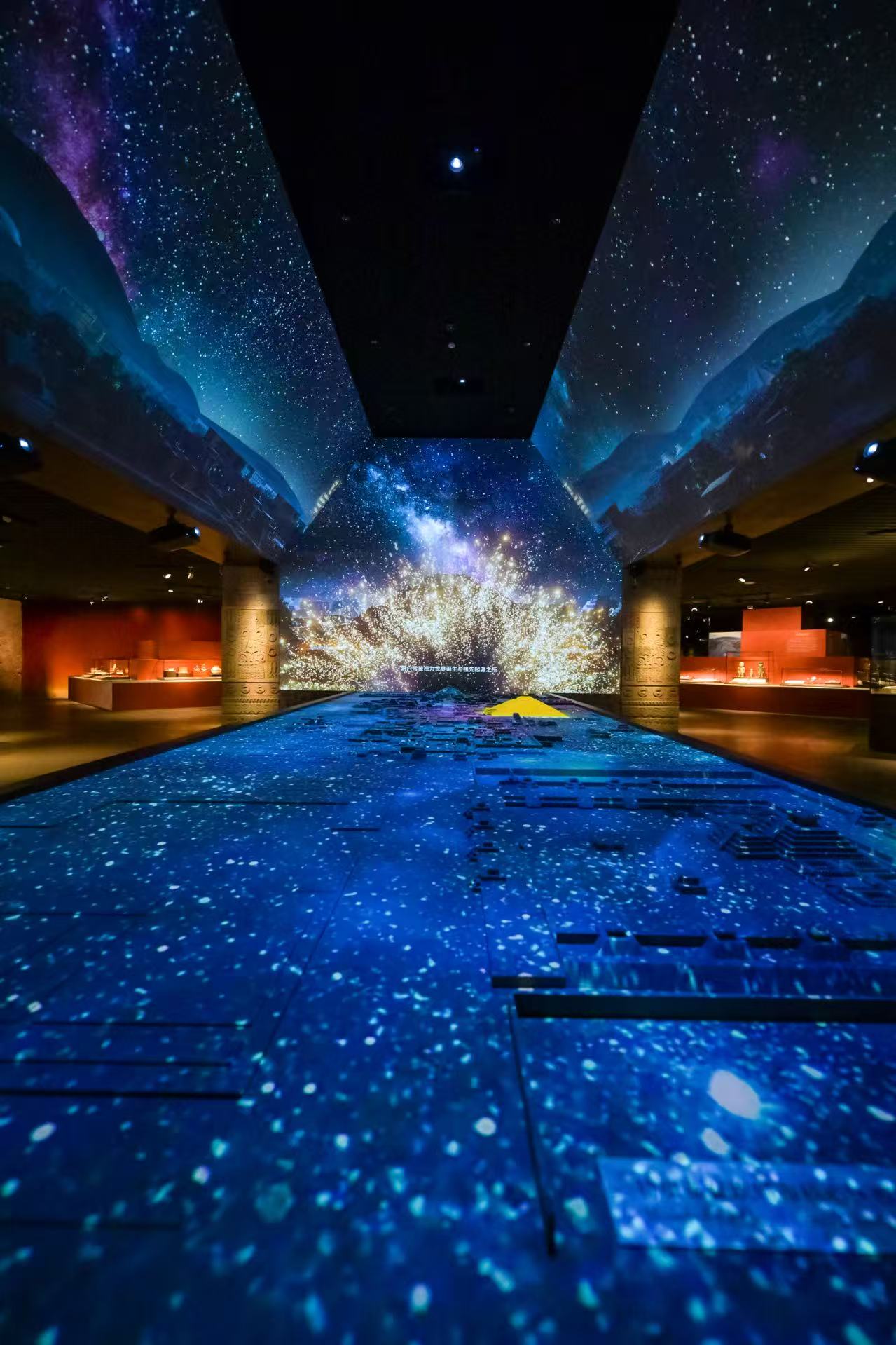
For the first time, the Shanghai Museum at People's Square is devoting its entire venue to a civilization-themed exhibition of a lifetime — "once in a lifetime, a must-see." The exhibition is structured around two major sections: "Sacred Time and Space" and "The Golden Empires." It brings together 1,129 sets (nearly 3,000 individual artifacts) from leading museums and cultural institutions in Mexico, Peru, and China. With over 7,000 square meters of exhibition space and more than 10,000 square meters of immersive experiential environments, the exhibition presents a panoramic view of the major ancient civilizations of Central and South America — including the Olmec, Maya, Teotihuacan, Aztec, and Andean cultures (Moche, Chimú, Inca) — spanning nearly 3,000 years of history.
ALIGHT serves as the core digital creative strategic partner for "The Summit of the World Tree: Ancient Civilizations of the Americas." Leveraging its full-chain capabilities in digital content strategy, multimedia creative development, and spatial narrative design, ALIGHT transforms research from mythology, archaeology, architecture, and history into a tangible and interactive language of spatial storytelling. Audiences are thus able to cross the boundaries of language and culture, forging a new cognitive connection with civilizations that flourished three thousand years ago.
In the cosmovision of ancient American civilizations, the World Tree reaches upward to the celestial realm where the gods dwell, and downward to the underworld where the spirits reside, while humans walk the earth between them. Time is not a river flowing in a single direction, but an eternal cycle of destruction and rebirth. Compared with the tangible artifacts on display, the spiritual world behind these civilizations is far more expansive — yet far more difficult for contemporary audiences to intuitively grasp. ALIGHT has chosen digital creativity as its medium and spatial experience as its language, building a bridge across three thousand years between the artifacts and the visitors.
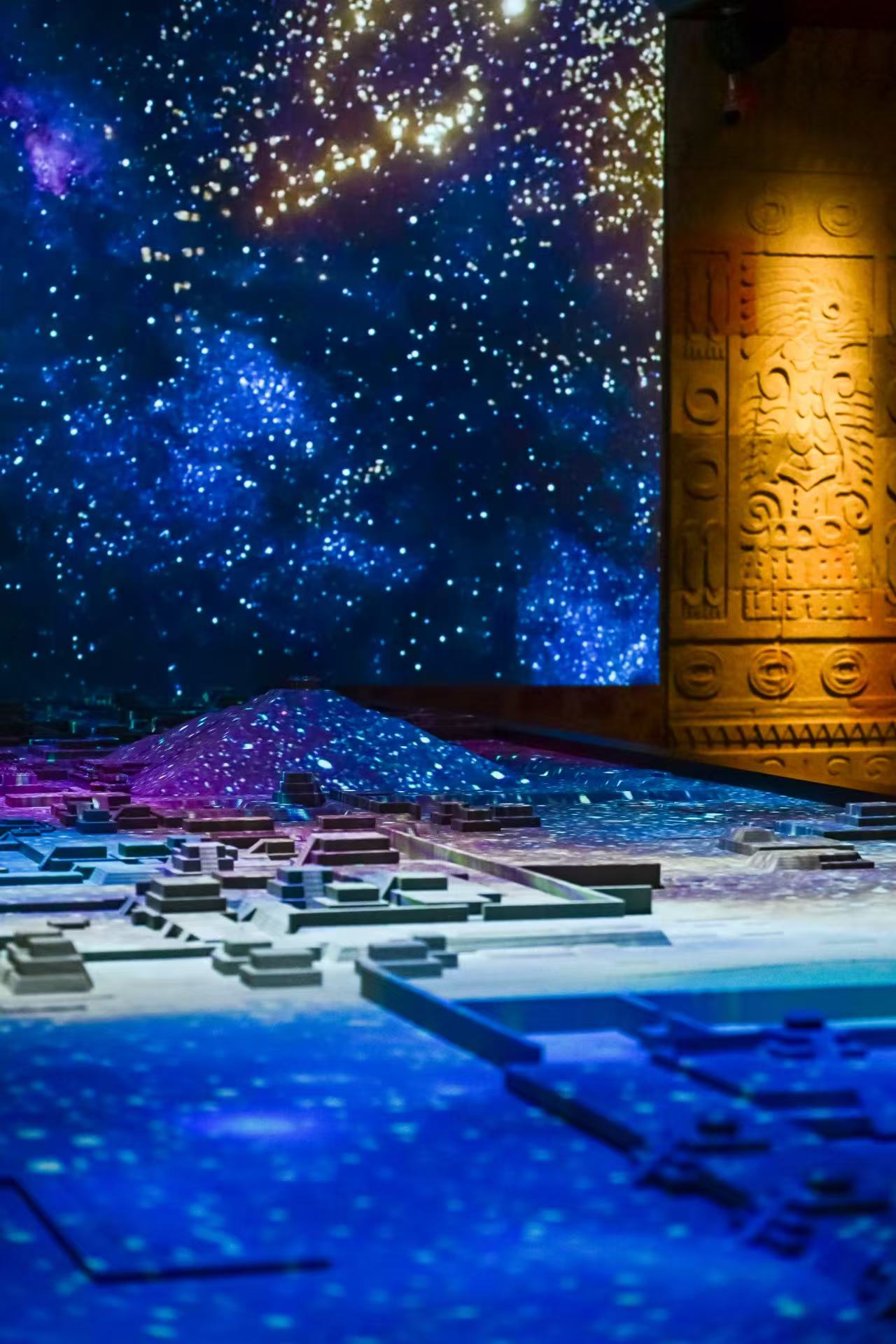
Faced with this vast and profound civilization system, the team has employed cutting-edge technologies — including immersive cinema, digital sand tables, and projection mapping for spatial storytelling — across an immersive experience space of over 10,000 square meters. From the four major ancient civilizations of Olmec, Maya, Teotihuacan, and Aztec, the team has distilled seven core cultural motifs, transforming the abstract concept of the "vertical cosmos" into a tangible spatial language that brings artifacts and mythological scenes to vivid life.